Please find below links to the blogs for students in the requested sample for June 2016 (The Downs School, 51213)
0051 ARMSTRONG Robin
0363 BARTLETT Alice
0197 BRENNAN-SCOTT Georgia
0237 FROMANT Georgia
0245 BALLARD Ciaran
0266 LANG Darcey
9301 LLEWELLYN Thomas
0277 MAUGHAN Peter
0376 MITCHELL Max
9435 PEARMUND Caitlin
Research and planning
Evaluation
0297 PEARSON Harry
0303 PINKERTON Daisy
0304 POWER Harry
0323 SHAW Caroline
0325 SHIRES Ben
Wednesday, 18 May 2016

Friday, 13 May 2016
Wednesday, 4 May 2016
Monday, 25 April 2016
G321 Blog links for June 2016 entry
ARMSTRONG Robin
BARTLETT Alice
BRENNAN-SCOTT Georgia
DOWNES Emily
EGBERS Emma
FISHER Abby
FROMANT Georgia
HAMILTON Ciaran
LANG Darcey
LLEWELLYN Tom
MAUGHAN Peter
MITCHELL Max
PEARMUND Caitlin
Preliminary task
Research and planning
Evaluation
PEARSON Harry
PINKERTON Daisy
POWER Harry
SHAW Caroline
SHIRES Ben
STANECKI Konrad
BARTLETT Alice
BRENNAN-SCOTT Georgia
DOWNES Emily
EGBERS Emma
FISHER Abby
FROMANT Georgia
HAMILTON Ciaran
LANG Darcey
LLEWELLYN Tom
MAUGHAN Peter
MITCHELL Max
PEARMUND Caitlin
Preliminary task
Research and planning
Evaluation
PEARSON Harry
PINKERTON Daisy
POWER Harry
SHAW Caroline
SHIRES Ben
STANECKI Konrad
Tuesday, 23 February 2016

Monday, 30 November 2015
Evaluation guide
Your
evaluation MUST directly address the following questions, one blog post per
question:
In what ways does your media product use, develop or challenge
forms and conventions of real media products?
- Analyse your finished pages- compare to real magazines to
demonstrate awareness of how you used conventions of real magazines, or how you challenged them. (You should not be reflecting at all on process here- it's all about the finished product).
How does your media
product represent particular social groups?
How does your magazine construct the representations? Analyse
the representation of all artists featured in your pages- is it positive? Is it similar to the representation of that
social group in real music magazines? (social group could be teenagers, rock
stars, folk singers, males/females- whatever is relevant to your magazine).
What kind of media institution might
distribute your media product and why?
Do quick research into Bauer and Time Inc. UK- the two major publishing institutions in the UK. Which do you think
would be best to distribute your magazine? Use the prompts below.
- Research IPC Media and Bauer Publishing Group (see 'institutions research' post). Note the wealth and
variety of magazines they publish.- Which of any of the magazines they publish cover, or come close to
covering, your target audience?- Now look specifically at the music magazines they publish and how
the target audiences vary. Is your target audience similar to any of the
publications?- Decide which of the two institutions have a market for your
product. You should judge this by the music magazines they currently publish-
how would your magazine target a different audience for the company? Why should
they invest?
Who would be the audience for your media
product?
Explain your target audience- has your audience changed at all
over the development of your magazine? For example, the look and style of it
might suit an older audience now... Your target audience in your evaluation can be slightly different from the one in
your planning- just explain the reasons why.
How did you attract/address your audience?
How did you attract/address your audience?
Refer to how your finished magazine appeals to your identified target
audience- fonts, images, layout, colour scheme, mode of address etc.
What have you learnt about technologies from the process of constructing this product?
What have you learnt about technologies from the process of constructing this product?
- You can talk about your progress with photography, Blogger, Adobe
Photoshop, Adobe InDesign and PowerPoint and/or any other technology you used. Take screen grabs of yourself using the software to
communicate this in an interesting way. ‘Before and after’ photos are a great
way to show off what you achieved with the technology.
Looking back at your preliminary task, what do you feel you have learnt in the progression from it to the full product?
Looking back at your preliminary task, what do you feel you have learnt in the progression from it to the full product?
- Summarise your skills development from the start of your
preliminary task through to now. Put your preliminary task beside your final product- what have you developed? (Understanding of conventions, importance of audience, photography, use of software etc)
What am I marked for?
- Your use of technology to produce your evaluation- video, image, links etc. A words-only evaluation cannot achieve above the top of level 1 (7 marks out of 20).
- Understanding of your audience and how your text appeals to them; how representation is constructed in your pages; what institutions might publish your magazine; magazine conventions used within your finished product; how new media technologies helped you through all stages of your portfolio.
- Ability to refer to the choices you made along the way and their outcome
- Ability to communicate.
Saturday, 28 November 2015
Evaluation question 3: institutions prompts
The majority of the UK’s most popular magazines are published by two
companies: Bauer and Time Inc. UK.
In your evaluation, you need to identify which publisher you think would
be interested in publishing your magazine and be able to justify your reasons.
1) Research Time Inc. UK and Bauer Publishing Group. Note the wealth
and variety of magazines they publish.
2) Which of any of the magazines they publish cover, or come close to
covering, your target audience?
3) Now look specifically at the music magazines they publish and how the
target audiences vary. Is your target audience similar to any of the
publications?
4) Decide which of the two institutions have a market for your product.
You should judge this by the music magazines they currently publish- how would
your magazine target a different audience for the company? Why should they
invest?
Monday, 9 November 2015
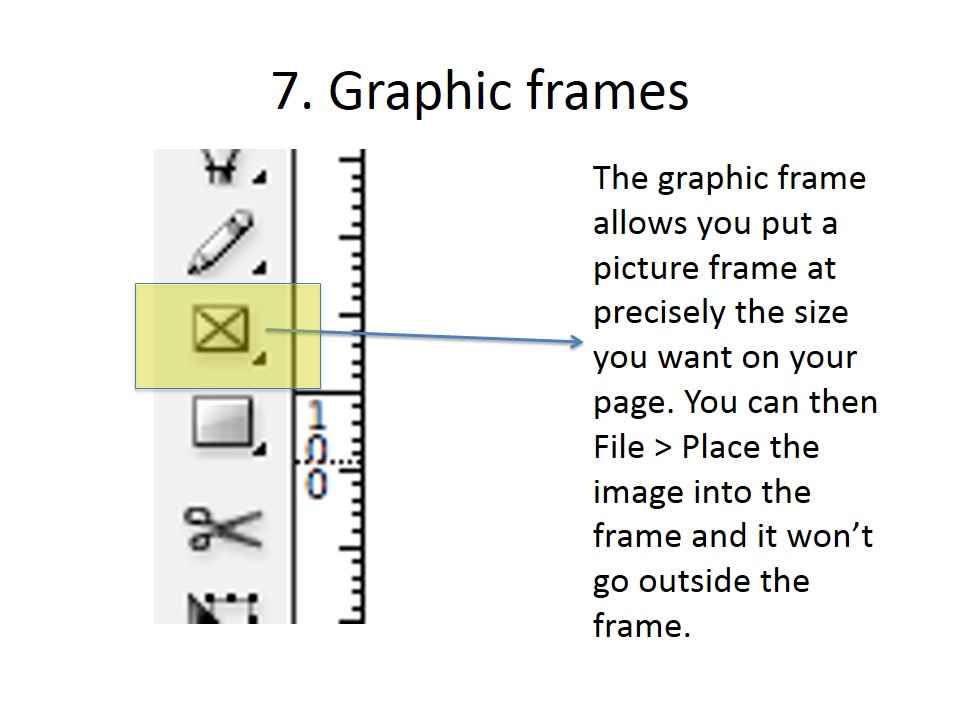
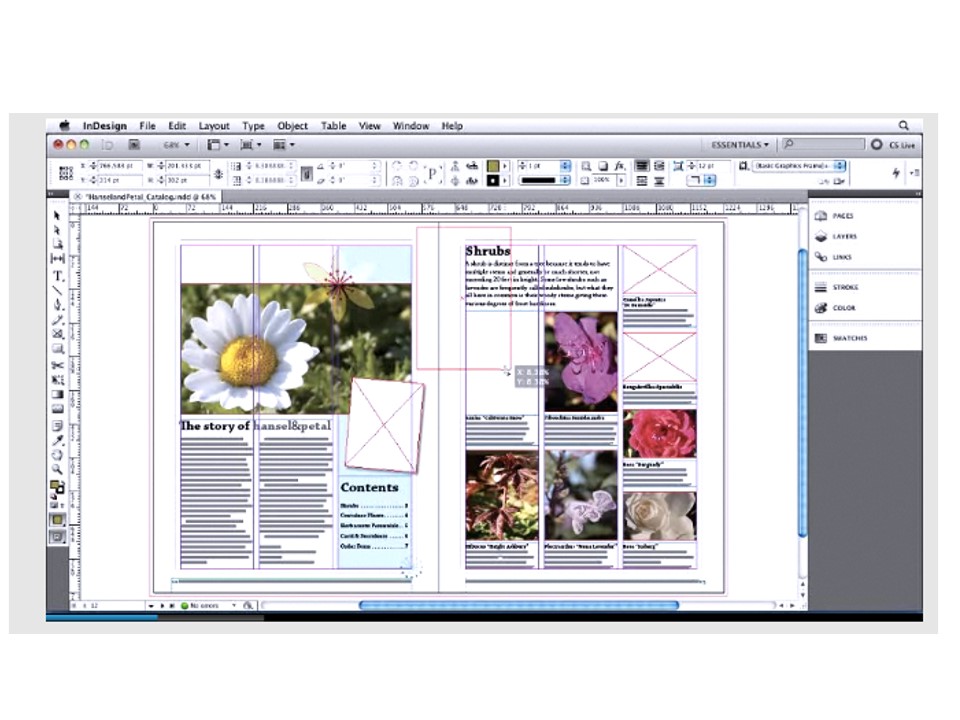
Interesting article about magazine fonts...
Feel free to experiment with some of their suggestions!
http://www.indesignskills.com/tutorials/best-magazine-fonts/
http://www.indesignskills.com/tutorials/best-magazine-fonts/
Sunday, 8 November 2015




Friday, 9 October 2015
Coursework checklist for 'research and planning'
Links to previous years' blogs: 2014, 2015 (group 1) and 2015 (group 2) entry
Must do…
|
Could also do…
|
RESEARCH
|
|
Research target readership of 3 existing music
magazines
|
|
Explore the conventions of music magazines, and reflect on the changing function of the music press in the digital age.
|
|
Research existing music magazines’ ‘house style’
|
|
Get audience
reactions to specific pages and images from magazines of your choice, to
reflect on effect of media language.
|
|
Think how
you use different types of media to conduct and present this- social media,
audio, video, still images, etc.
|
|
PLANNING
|
|
Initial ideas for your own music magazine
|
Look at
existing music magazines- are there any genres that aren’t currently catered
for? Is there a gap in the market for something different?
|
Consider your
reader’s consumer habits; what kind of products would want to advertise in
your magazine?
|
|
Plan your magazine’s name and masthead design-
analyse your ideas for their effectiveness, and explain your final decision.
|
Survey
your audience with your possible names and mastheads?
|
Plan your magazine’s ‘house style’
|
Reflect on
inspiration you got from your magazine research
|
Mood board
for your artist.
|
|
Plan other artists appearing in your magazine
|
|
Plan pages layout – hand drawn sketches
|
|
Drafts of article ‘copy’ (words)
|
|
Photography planning- main and supporting
photography.
|
|
Post discarded photographs from your photo shoot
|
|
Save draft versions of your pages as you go along, so
that you can show the page development and post drafts on your blog.
|
Get your
audience’s feedback on your magazine’s progress, and act on their feedback if
necessary.
|
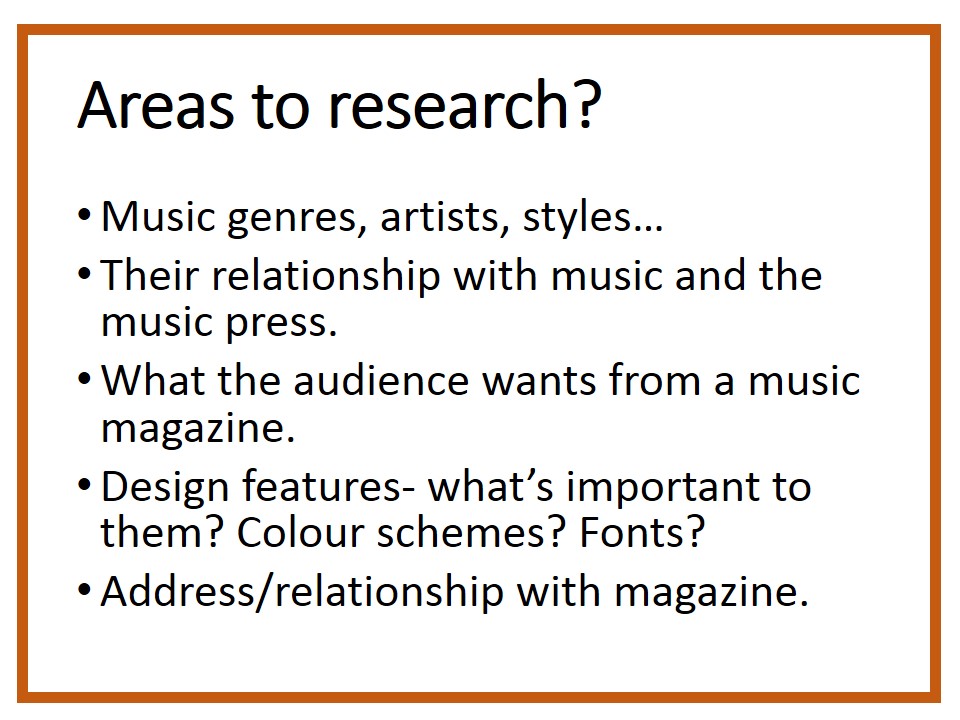
Audience research prompts
The purpose of your audience research is to inform your own magazine development. You need to know your audience before you can hope to appeal to them!
Complete this research for Monday.


Thursday, 8 October 2015

Saturday, 3 October 2015







Wednesday, 20 May 2015
MODERATOR: Blog links for G321 June 2015
Note to the moderator: where no link to a preliminary task blog is given, then the preliminary task is at the beginning of the candidate's 'research and planning' blog. Thanks.
Hayley Stacey
Preliminary task: hayleys--musicmag.blogspot.co.uk
Research and planning: hayleysmusicmagazinee.blogspot.co.uk
Evaluation: hayleysevaluationmusicmag.blogspot.co.uk
Guy Leftwich
Research and planning: guylmagazine.blogspot.co.uk
Evaluation: guysevaluation.blogspot.com
Bibek Gurung
Preliminary task: bibekgrng.blogspot.co.uk
Research and planning: gurubibek.blogspot.co.uk
Evaluation: gurublogsevaluation.blogspot.co.uk
James Van Huyssteen
Preliminary task: jamesvh.blogspot.co.uk
Research and planning: jamesvhvh.blogspot.co.uk
Evaluation: jamesvhmusic.blogspot.co.uk
Melissa Butler
Preliminary task: melissaprod.blogspot.co.uk
Research and planning: melissasmusicmag.blogspot.co.uk
Evaluation: melissasmusicmagevaluation.blogspot.co.uk/
Anya Charrington
Research and planning: anyacharrington.blogspot.com
Evaluation: anyacharringtonevaluation.blogspot.com
George Buckland
Research and planning: georgebmagazine.blogspot.co.uk
Evaluation: georgesmusicmagevaluation.blogspot.co.uk
Danielle Beckett:
Research and planning: Dannicox46.blogspot.co.uk
Evaluation: dannisevaluation.blogspot.co.uk/
Caitlin Pearmund
Preliminary task: caitlinpearmund.blogspot.co.uk
Research and planning: caitlinmusicmag.blogspot.co.uk
Evaluation: caitlinpearmundevaluation.blogspot.com/
Sophia Forrester
Research and planning: sophiaforrester.blogspot.co.uk
Evaluation: sophiasevaluation.blogspot.com
Joshua Morris
Research and planning: joshuamorris2.blogspot.co.uk
Evaluation: joshevaluation.blogspot.com
Theodore Ritter
Preliminary task: theoritter.blogspot.co.uk
Research and planning: theomagazine.blogspot.co.uk
Evaluation: theomagazine.blogspot.co.uk
Eleanor Sanmogan
Preliminary task: eleanorsanmogan.blogspot.co.uk
Research and planning: elliesmusicmags.blogspot.co.uk
Evaluation: http://elliesanmoganevaluation.blogspot.co.uk/
Dexter Roper
Research and planning: dexterroper.blogspot.co.uk
Evaluation: dexterroper44.blogspot.co.uk
Orienne Attwool
Research and planning: oriattwool.blogspot.com
Evaluation: orievaluate.blogspot.co.uk
Hayley Stacey
Preliminary task: hayleys--musicmag.blogspot.co.uk
Research and planning: hayleysmusicmagazinee.blogspot.co.uk
Evaluation: hayleysevaluationmusicmag.blogspot.co.uk
Guy Leftwich
Research and planning: guylmagazine.blogspot.co.uk
Evaluation: guysevaluation.blogspot.com
Bibek Gurung
Preliminary task: bibekgrng.blogspot.co.uk
Research and planning: gurubibek.blogspot.co.uk
Evaluation: gurublogsevaluation.blogspot.co.uk
James Van Huyssteen
Preliminary task: jamesvh.blogspot.co.uk
Research and planning: jamesvhvh.blogspot.co.uk
Evaluation: jamesvhmusic.blogspot.co.uk
Melissa Butler
Preliminary task: melissaprod.blogspot.co.uk
Research and planning: melissasmusicmag.blogspot.co.uk
Evaluation: melissasmusicmagevaluation.blogspot.co.uk/
Anya Charrington
Research and planning: anyacharrington.blogspot.com
Evaluation: anyacharringtonevaluation.blogspot.com
George Buckland
Research and planning: georgebmagazine.blogspot.co.uk
Evaluation: georgesmusicmagevaluation.blogspot.co.uk
Danielle Beckett:
Research and planning: Dannicox46.blogspot.co.uk
Evaluation: dannisevaluation.blogspot.co.uk/
Caitlin Pearmund
Preliminary task: caitlinpearmund.blogspot.co.uk
Research and planning: caitlinmusicmag.blogspot.co.uk
Evaluation: caitlinpearmundevaluation.blogspot.com/
Sophia Forrester
Research and planning: sophiaforrester.blogspot.co.uk
Evaluation: sophiasevaluation.blogspot.com
Joshua Morris
Research and planning: joshuamorris2.blogspot.co.uk
Evaluation: joshevaluation.blogspot.com
Theodore Ritter
Preliminary task: theoritter.blogspot.co.uk
Research and planning: theomagazine.blogspot.co.uk
Evaluation: theomagazine.blogspot.co.uk
Eleanor Sanmogan
Preliminary task: eleanorsanmogan.blogspot.co.uk
Research and planning: elliesmusicmags.blogspot.co.uk
Evaluation: http://elliesanmoganevaluation.blogspot.co.uk/
Dexter Roper
Research and planning: dexterroper.blogspot.co.uk
Evaluation: dexterroper44.blogspot.co.uk
Orienne Attwool
Research and planning: oriattwool.blogspot.com
Evaluation: orievaluate.blogspot.co.uk
Thursday, 7 May 2015
Film industry unit- lesson slides
Hi Year 12,
Below is a link to the class powerpoints you've had for the film industry unit- all merged together into one giant 300+ slide monster...
Lesson slides ppt
Below is a link to the class powerpoints you've had for the film industry unit- all merged together into one giant 300+ slide monster...
Lesson slides ppt
Wednesday, 1 April 2015
Glossary of key film industry terms
Film Industry
Key Terms
360 degree, saturated marketing campaign –a campaign
that covers every possible format in as many territories as possible and is
extensive.
BBFC - The British Board of Film
Classification: the British film regulatory board.
Blanket/global
release- releasing
the film everywhere around the world at the same time (releasing it on
different dates in different countries is known as a staggered release).
Buzz - hype created about a film
through publicity online and in the press.
CGI- computer-generated
imagery. Filming in front of a green or blue screen, then images added on a
computer.
Colour grading- improving,
manipulating or enhancing an image in editing.
Concentration of
ownership:- most media companies are owned by a small number
of conglomerates, so ownership is concentrated.
Conglomerate- a large media
company that contains several smaller companies within it (e.g. The Walt Disney
Company, Viacom, 21st Century Fox etc).
Convergence – previously
separate types of media have now converged with the development of new media
technologies. The use of different mediums is now common, i.e. comic books,
publishing, TV and Film, online etc to create a world outside just the film
which in turn helps advertising. The film industry uses all the different media
types now to promote and distribute its films.
Cross-media
ownership- owning companies in more than one media sector
(e.g. film and television.) The conglomerates are all examples of cross-media
ownership.
Demographic profile - analysing
audience in a quantitative manner, mainly consider gender (Male/ Female), age
(ranges i.e. 5-12), socio-economic class (ABC1C2DE) and ethnicity.
Digital
Intermediate- footage is filmed on 35mm film, transferred to
computer for editing, then back to film for distribution. (Hollywood is mainly
all digital now, but some studio films are still made with these methods).
Distributor– the company in
charge of getting the film released and marketing it to the target audience.
Film buyer - an employee
of a Distribution company who is responsible for finding films with profitable
potential, they usually search at film festivals.
Film festivals - major
publicity events, filmmakers can enter their films into film festivals across
the world in the hope of winning awards and attracting distribution. Some films
at festivals will already have distribution, but are hoping for awards in order
to boost profit.
Genre - a way of categorising film,
this is a very useful tool for distributors as it helps them to produce sale
forecasts.
Hardware- the physical
media items, such as cameras and devices (smartphones, computers, tablets,
televisions etc).
HD- high definition
Independent industry - all films
produced outside of the Hollywood conglomerate system.
Merchandise- products related
to a film that make money for the production company and help to promote the
film. Toys, clothing, games etc.
MPAA - The Motion Picture
Association of America is the America equivalent to the BBFC.
On-demand- Sky Box Office,
Blinkbox, BT Vision etc. You pay for just the movies you want.
Online distribution - distributing
a film via the internet, including making it available on streaming sites such
as Netflix, or for download in places like iTunes.
Piracy- films stolen
(e.g. filmed in the cinema) and distributed illegally through DVDs or online.
Pre-existing property - something a
film is based on, it could be a novel, another film, a comic book or even a
theme park ride (as Pirates of the Caribbean was).
Premier - a major media event when
the film is shown to the public for the first time, this will generally occur
in a major central cinema such as in Leicester Square, London.
Press junket – a day when
journalists are invited to meet and interview key cast and crew from the film.
The cast will speak to each journalist for a set time, i.e. 10 minutes before
the next is invited in.
Press pack - a document
from the distributor which gives journalists key information about the film,
i.e. cast and crew, 10 frequently asked questions and a synopsis.
Press screening - a screening
exclusively for journalists and reviewers before the Premier to encourage early
reviews of the film.
Production: the process of
making a completed film.
Product
Placement: when a company pays for their brand or product to
appear in a film (e.g. Heineken in Skyfall).
Proliferation: to increase or
spread at a rapid rate
Promotion - any advertising which
involves competitions or involves the film being advertised through other
products.
Publicity - press coverage of the film,
this could take the form of TV or print interviews, articles or documentaries
about the making of…
Sales agent - a person
employed by the production company to help raise awareness of the film and to
attract a distributor.
Special effects - the use of
technology to create effects that are impossible in our real world or to
enhance images.
Streaming- watching films
through the internet without having to download them. (subscription services
like Netflix and Amazon Prime Instant Video, as well as on-demand streaming
like Blinkbox and Google Movies).
Studio productions - any
production made in Hollywood by the majors.
Subsidiary – another
company within the same conglomerate.
Synergy – working together with other
companies to produce or distribute the film (see tie-ins, spin-offs,
merchandise, product placement and pre-existing property).
Tagline - a brief, enigmatic
statement which sells the film, normally seen on posters, trailers and online
advertising.
Target audience - the key
audience that the distributors are aiming their campaign at.
Teaser campaign - the early
marketing campaign which leaves audiences asking questions and wanting more.
Tie-ins- when a film
and a product work together to promote each other (e.g. Happy Meals, or Skyfall
and Omega watches)
USP (Unique selling point) - the aspect
that makes the film different from others; the main selling point to push in
the campaign.
Viral marketing - interactive,
online marketing. This usually refers to something beyond just a standard
website.
Zeitgeist - the ‘thing’ of the time.
Marketing - all print, online,
audio-visual advertising created for the film
Subscribe to:
Posts (Atom)